Retirement isn’t just about reaching a number or a specific age. It’s a significant life transition that requires preparation beyond financial planning.
How do you shift from a lifetime of saving to spending? How do you build new communities and find purpose when work becomes optional?
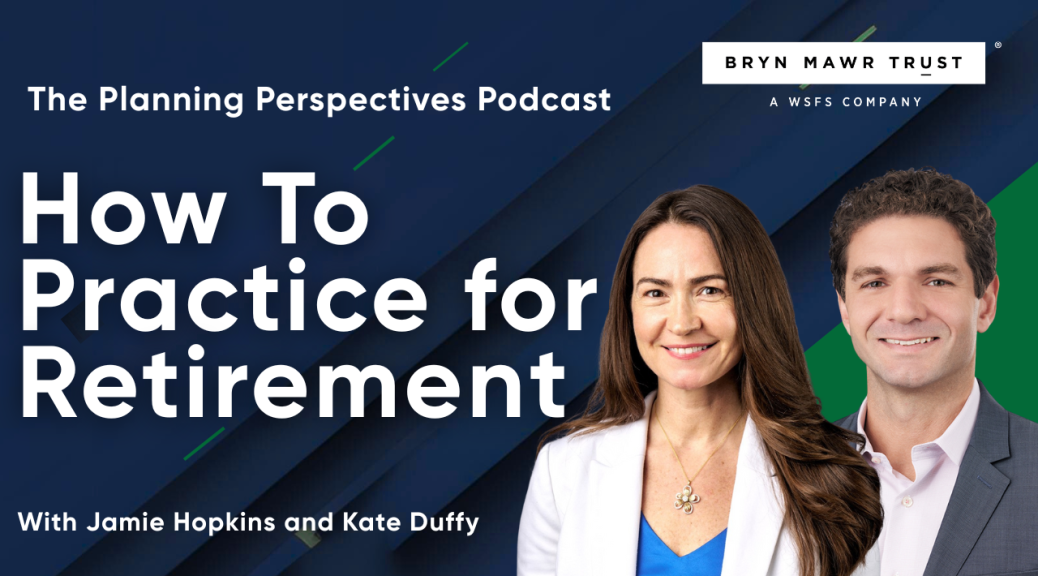
In this episode, Jamie Hopkins and Kate Duffy explore the concept of “practicing retirement” and how to prepare for this major life transition at every stage of life. They discuss the psychological challenges of spending down savings, the importance of aligning your values with your spending, and practical strategies like bucketing, visualization, and test-driving retirement lifestyle choices.
Key takeaways:
The psychological and behavioral challenges of transitioning from saving to spending in retirement
The importance of retirement planning beyond finances, including identity shifts, community building, and lifestyle changes
How to use bucketing and visualization techniques throughout your life to align spending with your values and goals
Practical strategies for test-driving retirement
The counterintuitive benefit of stopping retirement savings 2-3 years before retiring to improve quality of life and potentially stay in the workforce longer
Leadership transitions often bring uncertainty, but with the right mindset, they can create opportunity and growth.
How do you step into bigger roles with confidence? How do mentorship, values, and community shape the journey of a leader?
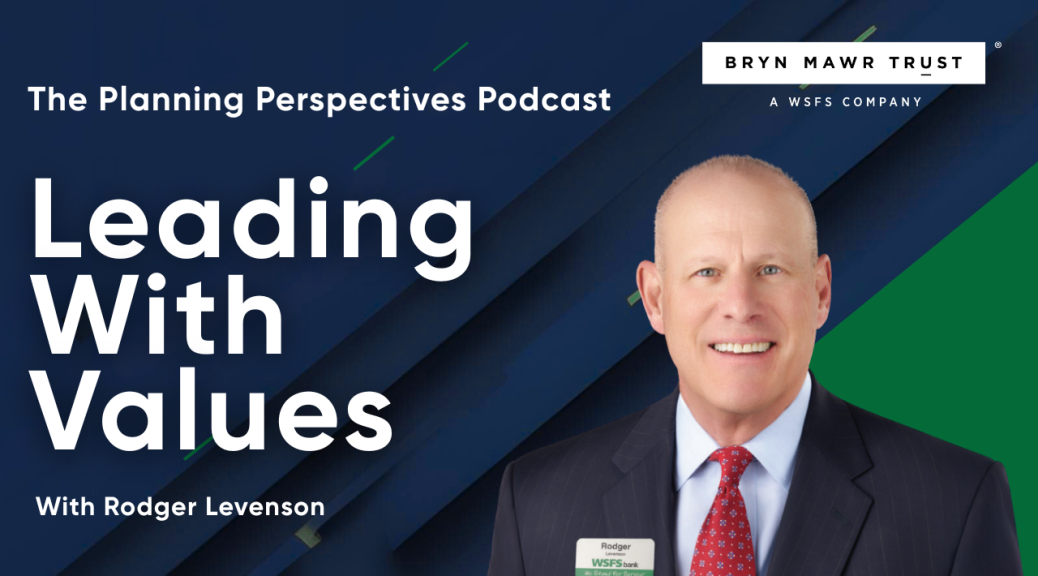
In this episode of The Planning Perspectives Podcast, hosts Jamie Hopkins and Kate Duffy welcome Rodger Levenson, Chairman, President, and CEO of WSFS Financial Corporation. Rodger shares his career journey, the importance of mentorship, the challenges of saying no, and why community connection is central to WSFS’s culture.
Key takeaways:
How Rodger progressed from credit analyst to CEO, and the leadership lessons learned along the way
The importance of mentors and building meaningful peer relationships
Why learning to say “no” is essential for effective leadership
How business owners display resilience and adaptability in changing environments
Why connecting employees’ work to a greater purpose drives lasting impact in the community
Rodger Levenson is Chairman, President, and Chief Executive Officer of WSFS Financial Corporation and its primary subsidiary, WSFS Bank.
Rodger has been a member of the WSFS Executive Management team since joining the Company in 2006. He has held several leadership roles at WSFS, including Executive Vice President (EVP) and Chief Operating Officer from July 2017 to December 2018, EVP and Chief Corporate Development Officer from June 2016 to July 2017, interim EVP and Chief Financial Officer from April 2015 to June 2016, and EVP and Chief Commercial Banking Officer from November 2006 to April 2015.
He began his banking career in 1986 in Philadelphia at CoreStates Financial (now part of Wells Fargo), where he led several business units over 17 years.
An active member of the Greater Philadelphia and Delaware communities, Rodger lends his experience and expertise to several local not-for-profits while continuing to champion economic growth throughout the region. His community and civic service includes memberships on the U.S. Federal Reserve Board’s Federal Advisory Council (FAC), Delaware Prosperity Partnership Board of Directors, as well as the Board of Directors, Executive Committee, and CEO Council for Growth of The Chamber of Commerce for Greater Philadelphia. He also serves as a member of the Delaware Business Roundtable, Children’s Hospital of Philadelphia (CHOP) Corporate Council, and on the Executive Committee of the Satell Institute for Corporate Social Responsibility. Rodger previously served as Chairman of the Delaware Bankers Association as well as the United Way of Delaware Board of Directors.
In 2021, Rodger was the recipient of the American Jewish Committee (AJC) Philadelphia and Southern New Jersey’s Community Leadership Award. In 2022, Rodger was named Drexel University Business Leader of the Year.
A native of Broomall, Pa., Rodger earned a Master of Business Administration from Drexel University and a Bachelor of Business Administration in Finance from Temple University. He reinforced his leadership experiences with certifications from The Wharton School at the University of Pennsylvania, the Center for Creative Leadership, and Harvard Business School.
Retirement isn’t just about money; it’s about how you spend your time, maintain relationships, and create a meaningful life.
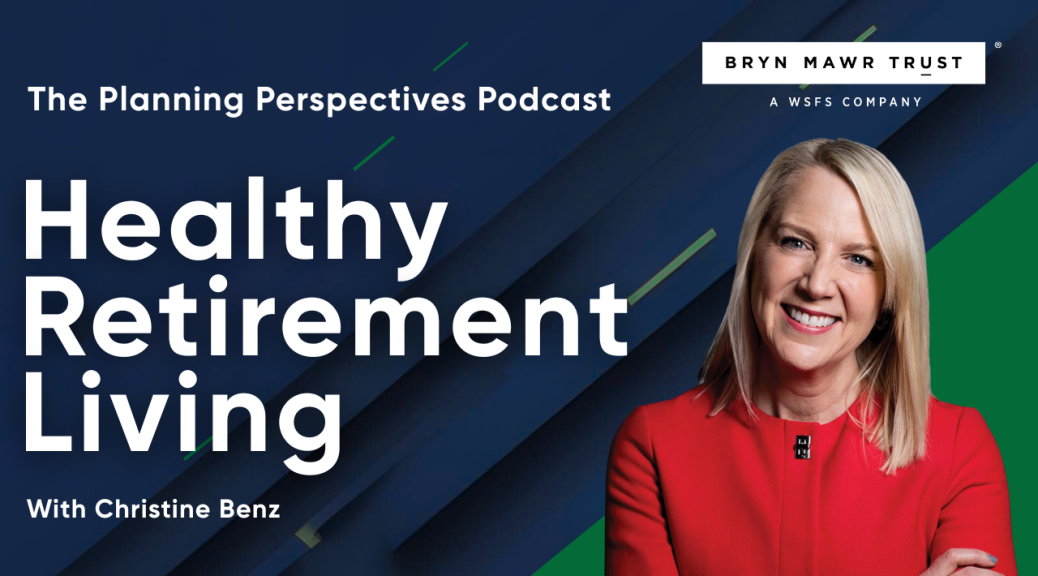
In this episode, Jamie Hopkins and Kate Duffy welcome Christine Benz, Morningstar’s Director of Personal Finance, to explore how retirement planning is shifting from purely financial to a more holistic approach.
Christine shares insights from her book How to Retire, highlighting why delaying retirement can be powerful, why relationships matter most, and how small lifestyle choices shape longevity.
Key takeaways:
Why phasing into retirement often works better than stopping suddenly
The value of enjoying experiences like family trips, even while still working
How relationships form the core of happiness in retirement
Why men, in particular, should proactively plan for social interactions after work
The role of physical activity and everyday interactions in staying well longer
Christine Benz is director of personal finance and retirement planning for Morningstar and senior columnist for Morningstar.com. In that role, she focuses on retirement and portfolio planning for individual investors.
Benz is the author of How to Retire: 20 Lessons for a Happy, Successful, and Wealthy Retirement (Harriman House, September 2024). She also wrote 30-Minute Money Solutions: A Step-by-Step Guide to Managing Your Finances (Wiley, 2010) and Morningstar® Guide to Mutual Funds: 5-Star Strategies for Success, published in 2005.
She also co-hosts a podcast for Morningstar, The Long View, which features in-depth interviews with thought leaders in investing and personal finance. She is a frequent public speaker and is widely quoted in the media, including The New York Times, The Wall Street Journal, Barron’s, CNBC, and PBS. In 2020, Barron’s named her to its inaugural list of the 100 most influential women in finance; she appeared on the 2021 list as well. In 2021, Barron’s named her as one of the 10 most influential women in wealth management.
Before assuming her current role in 2008, she served as Morningstar’s director of mutual fund analysis and was editor of Morningstar Mutual Funds and Morningstar FundInvestor.
Benz holds a bachelor’s degree in political science and Russian from the University of Illinois at Urbana-Champaign. She is president of the board for the John C. Bogle Center for Financial Literacy. Benz is also a member of The Alpha Group, a group of thought leaders from the wealth management industry from across the country. In her free time, she works with underprivileged women to improve their understanding of personal finance concepts.