How much is enough for retirement, and what does a successful retirement really look like? While many people focus on reaching a specific savings number, the bigger challenge is building a plan that supports the life they want to live and gives them confidence to actually enjoy it.
In this episode, Jamie Hopkins and Kate Duffy explore why retirement is about more than money. They discuss how values, purpose, flexibility, and a written income plan can help transform retirement from a financial milestone into a fulfilling next chapter. From defining what “enough” means for you to learning how to spend with confidence, this conversation offers a fresh perspective on retirement planning.
Key Takeaways
Why there is no universal retirement number and how to determine what “enough” means for your lifestyle
How a written retirement income plan can help you spend with greater confidence
The role of personal values, purpose, and community in creating retirement satisfaction
Why flexibility in spending, saving, and retirement timing can strengthen long-term outcomes
Estate planning is often seen as something for the wealthy or something to tackle later—but the reality is far more immediate. The decisions you make today can shape how your loved ones navigate difficult moments in the future.
In this episode of The Planning Perspectives Podcast, Jamie Hopkins and Kate Duffy are joined by Garrett Spangler, JD, LLM, Senior Wealth Strategist at Bryn Mawr Trust Advisors, to discuss why estate planning goes well beyond transferring assets. They explore the importance of family conversations, the roles of powers of attorney and living wills, and how tools like beneficiary designations, legacy letters, and digital asset planning help ensure your wishes are clearly understood.
The conversation also highlights common missteps, the need to revisit plans after major life events, and how thoughtful preparation can ease stress for loved ones when guidance matters most.
Key takeaways:
Estate planning should address life events, incapacity, and family decision-making—not just wealth transfer
Beneficiary designations can override wills, making regular reviews essential
Legacy letters and family communication help clarify intentions beyond legal documents
Digital assets and life changes require ongoing updates to keep plans current
Garrett C. Spangler is a Senior Wealth Strategist with Bryn Mawr Trust Advisors. In his role, Garrett works with clients on a variety of planning areas such as trust and estate planning, business succession planning, retirement planning, income taxes, and liability exposure. Prior to his role in wealth planning, Garrett practiced tax, estate, and corporate law with an emphasis on international planning at law firms in Philadelphia and the surrounding area. Garrett earned his law degree (J.D.) and Master’s in Taxation (LL.M.) from Temple University’s Beasley School of Law and his bachelor’s degree (B.S.) from Penn State University’s Smeal College of Business. He has also received the CEPA (Certified Exit Planning Advisor) designation from the Exit Planning Institute.
In addition to his work with Bryn Mawr Trust Advisors, Garrett spent many years as an adjunct faculty member of Delaware Valley University where he taught Corporate Taxation, Federal Income Taxation, Financial Planning, and Estate Planning. He has also lectured at Temple Law on international tax issues and presented to his peers on tax, business, and estate planning related topics in continuing education courses.
Garrett is a member of the bars of Pennsylvania and New Jersey and is admitted to practice before the United States Tax Court.
Retirement plans have long been seen as expensive, complex, and difficult to manage—especially for small businesses. But that perception is changing.
In this episode of the Planning Perspectives Podcast, Jackie Reeves joins Jamie Hopkins and Kate Duffy to explore what’s different today, the opportunities many employers may be overlooking, and why taking a fresh look at your current plan could deliver meaningful value for both your business and your employees.
Key Takeaways:
Why no business is “too small” to offer a retirement plan—and how accessibility has improved
How modern plans have become more affordable, streamlined, and easier to manage
Why retirement benefits are now a powerful differentiator for attracting and retaining talent
How features like automatic enrollment—and a simple plan review—can significantly improve outcomes
And more.
This conversation makes a compelling case for revisiting your approach—because today’s retirement plans aren’t just easier, they’re a strategic advantage.
Jacqueline (Jackie) Reeves leads Retirement Plan Services at Bryn Mawr Trust, a WSFS company. She works with business owners to design, evaluate, and optimize retirement plans that align with company goals, employee needs, and evolving regulatory requirements. Jackie specializes in helping organizations navigate plan design, fiduciary oversight, retirement plan benchmarking, participant engagement, and long-term retirement readiness strategies. Throughout this conversation, she shares practical insights on how business owners can simplify retirement plan decisions while creating meaningful benefits for their employees.
Roth accounts can shape how and when taxes are paid, but the right choice depends on timing, income, and long-term goals.
How can savers use Roth planning to create more flexibility before and during retirement?
In this episode, Jamie Hopkins and Kate Duffy explain how Roth IRAs, Roth 401(k)s, conversions, and backdoor Roth contributions fit into a broader financial plan. They compare Roth and traditional accounts, explain income limits, cover required distributions, and share why high earners may still benefit from Roth strategies. The conversation also clears up common myths and highlights why tax diversification matters.
Key takeaways:
How Roth IRAs differ from traditional IRAs when it comes to taxes, timing, and withdrawals
Why high-income years may not be ideal for Roth contributions, but Roth planning can still fit
How Roth conversions can help retirees use lower-income years to shift money strategically
Why Roth 401(k)s may offer higher contribution room without Roth IRA income restrictions
How backdoor Roth contributions work and why existing IRA balances can create tax issues
Periods of economic uncertainty often lead people to question their financial choices, yet most long-term outcomes are shaped by steady decisions rather than day-to-day noise.
Why do we feel worried even when the data looks stable? How do rising prices, interest rates, and shifting job conditions influence real-life planning?
In this episode, Jamie Hopkins and Kate Duffy talk with Andrew Davis, CFA, Head of Macroeconomic Research at Bryn Mawr Trust, about inflation trends, labor market shifts, and what the past year reveals about consumer behavior.
They walk through the Fed’s direction, the impact of housing constraints, and how portfolios may evolve as rate cuts move closer. In addition, Andrew explains what investors should watch in 2026 and why staying focused on long-term planning matters more than reacting to news cycles.
Key points:
How inflation shapes consumer frustration even when headline figures ease
Why the labor market shows cooling but still signals underlying strength
How today’s rate environment influences housing decisions and affordability
What market performance says about earnings growth and diversification
Why sticking to a clear financial plan helps reduce emotional reactions
Andrew Davis is an investment strategist with more than a decade of experience applying macro insights and portfolio construction principles to help clients make informed decisions in changing conditions. He blends real-time market perspective with a long-term approach, offering guidance that is both thoughtful and actionable.
In his role as Head of Macro Research, he shapes asset allocation views, contributes to the firm’s wide investment strategy, and supports advisor teams with clear, data-focused commentary. His weekly video series, Two the Point, highlights key economic themes for an audience of investors looking for clarity amid constant noise. He has appeared as a guest commentator on CNBC’s Fast Money and has been recognized by the American Bankers Association’s 40 Under 40 in Wealth Management and WealthManagement.com’s Rising Star Award for leadership and innovation.
Andrew earned his MBA with honors from The Wharton School and holds a Master’s in Applied Economics from Johns Hopkins University, along with the CFA designation. His work is grounded in data, shaped by purpose, and focused on insights that build confidence and long-term value.
Retirement isn’t just about reaching a number or a specific age. It’s a significant life transition that requires preparation beyond financial planning.
How do you shift from a lifetime of saving to spending? How do you build new communities and find purpose when work becomes optional?
In this episode, Jamie Hopkins and Kate Duffy explore the concept of “practicing retirement” and how to prepare for this major life transition at every stage of life. They discuss the psychological challenges of spending down savings, the importance of aligning your values with your spending, and practical strategies like bucketing, visualization, and test-driving retirement lifestyle choices.
Key takeaways:
The psychological and behavioral challenges of transitioning from saving to spending in retirement
The importance of retirement planning beyond finances, including identity shifts, community building, and lifestyle changes
How to use bucketing and visualization techniques throughout your life to align spending with your values and goals
Practical strategies for test-driving retirement
The counterintuitive benefit of stopping retirement savings 2-3 years before retiring to improve quality of life and potentially stay in the workforce longer
Retirement isn’t just about money; it’s about how you spend your time, maintain relationships, and create a meaningful life.
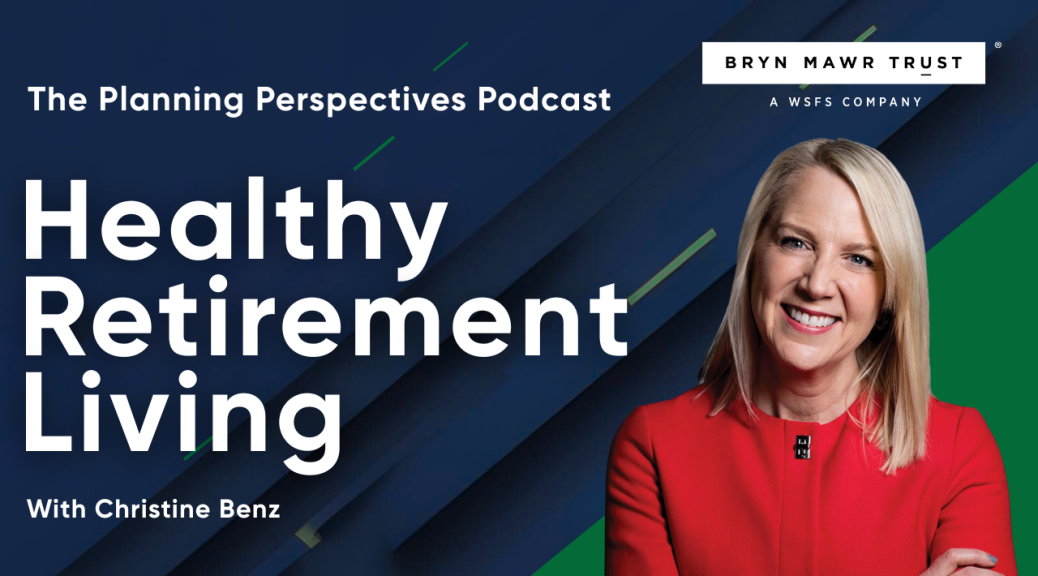
In this episode, Jamie Hopkins and Kate Duffy welcome Christine Benz, Morningstar’s Director of Personal Finance, to explore how retirement planning is shifting from purely financial to a more holistic approach.
Christine shares insights from her book How to Retire, highlighting why delaying retirement can be powerful, why relationships matter most, and how small lifestyle choices shape longevity.
Key takeaways:
Why phasing into retirement often works better than stopping suddenly
The value of enjoying experiences like family trips, even while still working
How relationships form the core of happiness in retirement
Why men, in particular, should proactively plan for social interactions after work
The role of physical activity and everyday interactions in staying well longer
Christine Benz is director of personal finance and retirement planning for Morningstar and senior columnist for Morningstar.com. In that role, she focuses on retirement and portfolio planning for individual investors.
Benz is the author of How to Retire: 20 Lessons for a Happy, Successful, and Wealthy Retirement (Harriman House, September 2024). She also wrote 30-Minute Money Solutions: A Step-by-Step Guide to Managing Your Finances (Wiley, 2010) and Morningstar® Guide to Mutual Funds: 5-Star Strategies for Success, published in 2005.
She also co-hosts a podcast for Morningstar, The Long View, which features in-depth interviews with thought leaders in investing and personal finance. She is a frequent public speaker and is widely quoted in the media, including The New York Times, The Wall Street Journal, Barron’s, CNBC, and PBS. In 2020, Barron’s named her to its inaugural list of the 100 most influential women in finance; she appeared on the 2021 list as well. In 2021, Barron’s named her as one of the 10 most influential women in wealth management.
Before assuming her current role in 2008, she served as Morningstar’s director of mutual fund analysis and was editor of Morningstar Mutual Funds and Morningstar FundInvestor.
Benz holds a bachelor’s degree in political science and Russian from the University of Illinois at Urbana-Champaign. She is president of the board for the John C. Bogle Center for Financial Literacy. Benz is also a member of The Alpha Group, a group of thought leaders from the wealth management industry from across the country. In her free time, she works with underprivileged women to improve their understanding of personal finance concepts.